

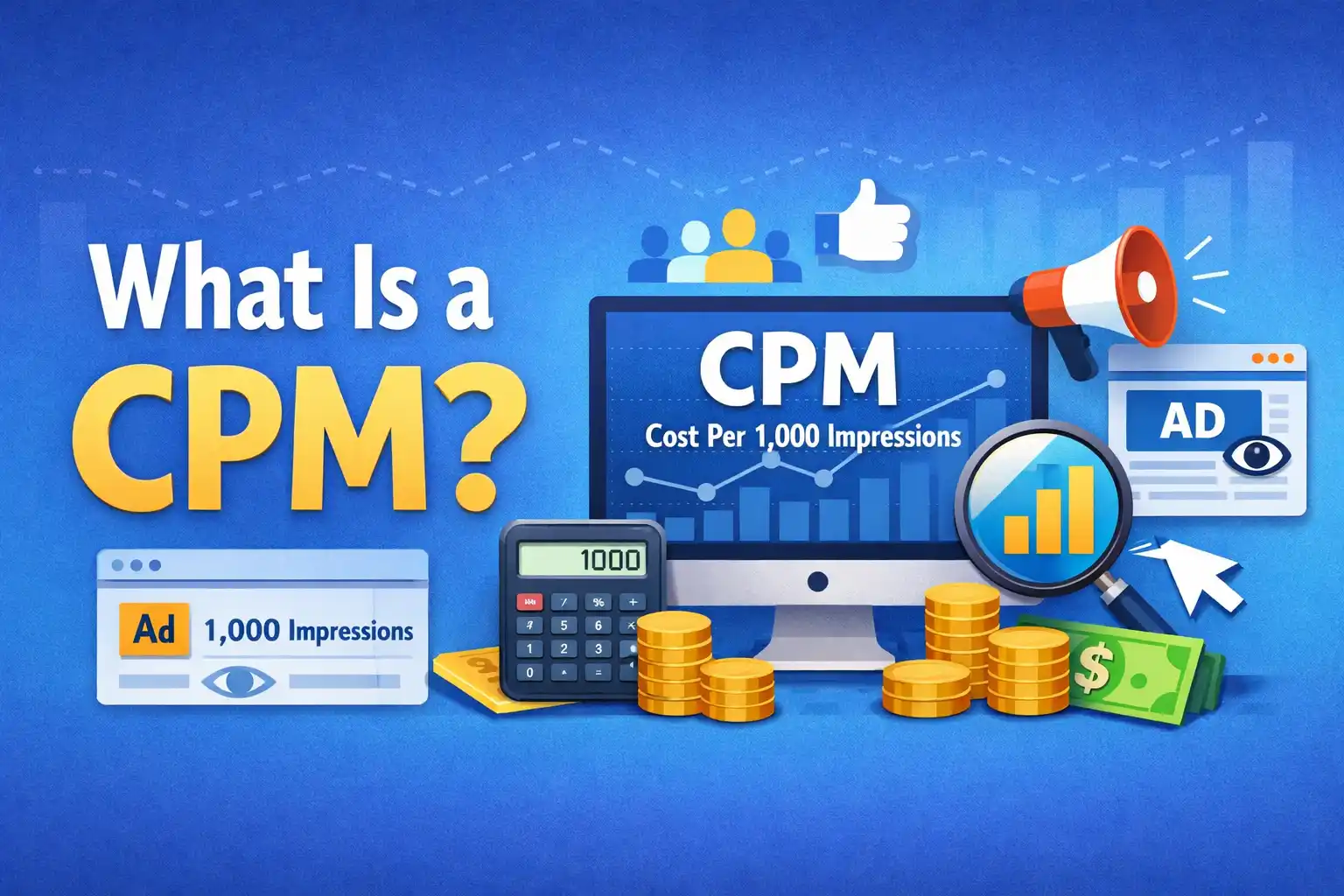
You’ve likely spotted the term “CPM” while scrolling through ad dashboards or planning your next campaign. So, what is a cpm exactly? It stands for Cost Per Mille—Latin for “thousand”—and it’s the price you pay for every 1,000 times your ad loads and becomes visible to someone.
No clicks required. No sales needed. You simply buy visibility. That’s why CPM powers everything from social media feeds to website banners and newsletter sponsorships.
If you’re trying to build brand awareness on a budget, this model lets you reach thousands without breaking the bank. It focuses purely on impressions, giving you a clear way to measure how far your message travels.
How Does CPM Actually Work in Practice?
Understanding Impressions vs. Other Metrics
An impression counts the second your ad appears on screen. It doesn’t matter if the viewer scrolls past or clicks away. The ad just has to load.
This sets CPM apart from other digital advertising costs. Page views or time spent don’t matter here—only that first moment of exposure. You’ll see it used heavily on the Google Display Network, Instagram, LinkedIn, and even email newsletter placements.
The CPM Formula Explained Step by Step
The math stays simple and consistent across platforms.

Run a $400 campaign that delivers 200,000 impressions and your cost per thousand impressions lands at $2. Flip the numbers around and you can predict exactly how many people you’ll reach with any given budget.
Most online campaigns today fall between $2 and $10 CPM, though niche audiences or premium placements can push higher. Knowing this formula keeps you in control—no surprises when the invoice arrives.
CPM vs. Other Advertising Models – Which One Should You Choose?
CPM Compared to CPC (Cost Per Click)
With CPM you pay for views. With CPC you pay only when someone clicks.
Choose CPM when you want broad reach and brand exposure. Switch to CPC when you need actual traffic or website visits. The two often work together in full-funnel strategies.
CPM Compared to CPA (Cost Per Action/Acquisition)
CPA ties your spend directly to results—sign-ups, purchases, or downloads. It costs more per event but guarantees action.
CPM shines at the top of the funnel where you simply need eyes on your message. Use it early, then layer CPA later to close sales.
Other Variants (CPV, eCPM, etc.)
You’ll sometimes hear about Cost Per View (CPV) for video or effective CPM (eCPM) in ad networks. They all revolve around the same core idea: paying for exposure rather than outcomes.
The Pros and Cons of Using CPM Campaigns
Key Advantages You’ll Love
CPM campaigns deliver massive scale fast. You can test creative variations cheaply and gather performance data without waiting for clicks. Small businesses and new brands especially benefit because the entry cost stays low while reach stays high.
Plus, you gain valuable insights into which audiences respond best—even if they don’t click right away.
Potential Drawbacks to Watch Out For
You never guarantee engagement. Some impressions waste away on bots or disinterested viewers. Ad fraud can inflate numbers, and you have less control over who actually sees your message.
Still, smart tracking and platform choices usually keep these risks manageable.
How to Lower Your CPM and Get Better Results
Target the right people at the right time. Narrow your audience, test different ad formats, and avoid peak seasons when competition spikes.
Write scroll-stopping headlines and use eye-catching visuals. Platforms reward relevance with lower costs.
Monitor performance daily, pause underperforming ads, and combine CPM with retargeting for better overall returns. Small tweaks here can shave dollars off your cost per thousand impressions without losing reach.
CPM in Email Marketing and Beyond
Newsletter sponsorships often quote CPM rates based on list size and open rates. One placement can put your offer in front of thousands of engaged subscribers for a predictable fee.
The same logic stretches to influencer posts, podcast ads, and even traditional billboards. Wherever you buy exposure by the thousand, CPM principles apply.
Frequently Asked Questions (FAQ)
What exactly does “a CPM” mean?
It means Cost Per Mille—the amount you pay for every 1,000 ad impressions. Nothing more, nothing less.
How is CPM different from CPC or CPA?
CPM charges for views, CPC for clicks, and CPA for completed actions. Pick the model that matches your current goal.
What is considered a good CPM rate?
Anything under $5 often feels like a win for general audiences. Niche or premium placements can justify $8–$15 and still deliver strong value.
Can I use CPM if I’m on a tight budget?
Absolutely. Start small, test different creatives, and scale what works. Many platforms let you begin with just a few hundred dollars.
How do I calculate my own CPM?
Divide total spend by total impressions, then multiply by 1,000. Most ad platforms show the number automatically.
Is CPM only for big brands?
No. Solopreneurs, local shops, and startups use it every day to grow awareness without huge budgets.
What’s the risk of ad fraud with CPM?
Fake impressions exist, but reputable platforms and third-party verification tools keep most campaigns clean. Always review performance reports closely.
Wrapping Up
You now know exactly what is a cpm and how it fits into your marketing mix. It gives you affordable reach, clear metrics, and a solid foundation for testing new ideas.
Take what you’ve learned, set a small test budget, and watch how cost per thousand impressions actually performs for your business. The more you use it, the sharper your decisions become.
Ready to stretch your ad dollars further? Start today and turn those impressions into real growth.