 +91 8076673524
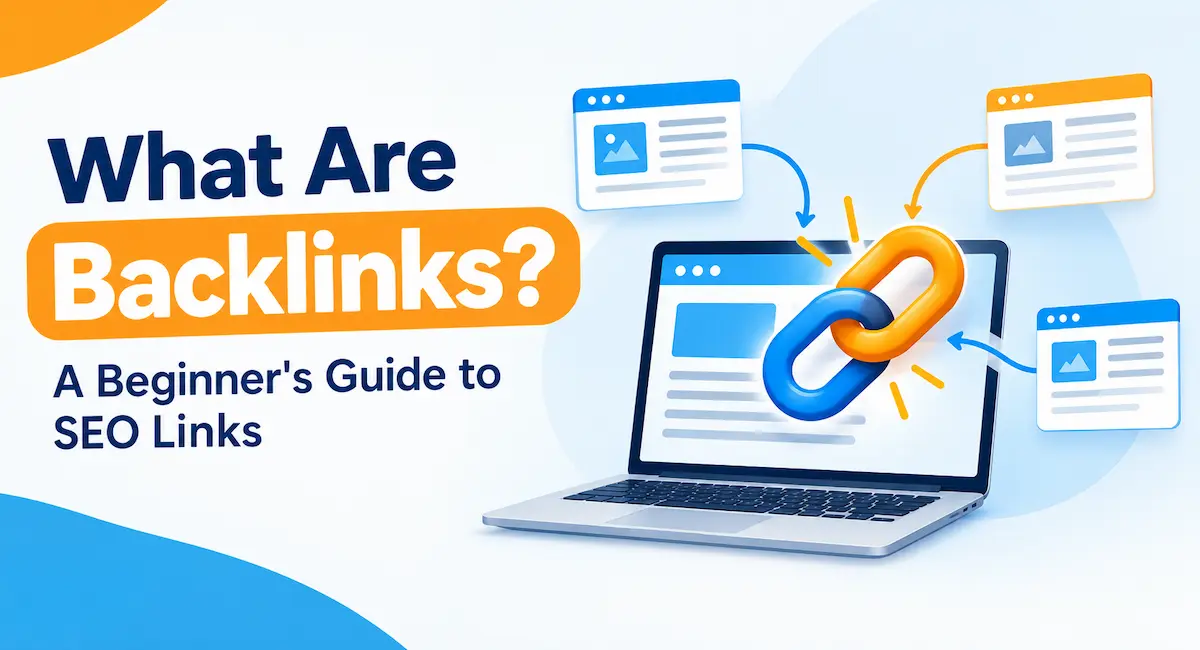
Have you ever thought that some pages are at the top of Google’s results, while other pages which are equally well written stay at the bottom? Backlinks are a major reason. So what are backlinks and why do SEO professionals get ecstatic about them?
To put it simply, backlinks are links connecting two websites. These links are considered as votes of confidence by search engines and the more authentic the vote giver, the more value the vote will have. This guide covers how backlinks work, why it is valuable to have them and how you can get them without risking a penalty and how you can establish whether or not they are paying off.
Key Takeaways
- A backlink is a link from another website that points to a page on your site. It is also called an inbound link.
- Backlinks are a trust signal. Google’s original PageRank system was built on the idea that links work like citations.
- Quality beats quantity. One relevant link from a respected site can outweigh dozens of weak ones.
- Never buy links or join link schemes. Google treats this as spam.
- The safest long-term strategy is to publish content people genuinely want to reference.
What Are Backlinks? (Simple Definition)
A backlink is a hyperlink on someone else’s website that leads to your website. If another food blogger links to your recipe page, then it counts as a backlink for you. To the blogger, it’s just an outbound link.
Compare backlinks to the references in an academic paper. Many reputable researchers refer to a paper and therefore it is assumed that it is important. Similarly, if a Web page is cited by many credible sites, it is assumed that it is useful.
The HTML code that creates a Backlink.
A simple backlink is represented as:
<a href=”https://yourwebsite.com/page”>descriptive anchor text</a>
The visible, clickable words (“descriptive anchor text”) are called the anchor text. href” is the page to go to.
Backlinks vs. Internal Links vs. Outbound Links
- Inbound links (backlinks): Links made by other sites to the site.
- Internal links: Links between pages in the same site.
- Outbound (external) links: Links that come from your site to others websites.
Backlinks are links that are not on your website, which is why they’re so difficult to control, and so valuable.
What is the Significance of Backlinks for SEO?
There are four primary reasons why backlinks are important.
1. They provide Google with information about your content
They give Google information about your content. The search engines discover new pages through links. Crawlers can access your content more quickly if you have a link from another indexed page. Google’s creators used the principle that links are important in the original PageRank algorithm, and Google has consistently said that links are still one of the indicators that it uses to know about the web pages.
2. They Build Authority and Trust
When reputable sites in your niche reference you, search engines and readers see you as a credible source. Over time this makes it easier for new pages on your site to rank.
3. They Drive Referral Traffic
No matter how much value the link has for SEO, it still provides real traffic to the article when it is placed in a well-read article. Some of those visitors turn into customers, subscribers or future linkers.
4. They Support Brand Awareness.They Build Brand Awareness.
Well-known publications mentioning and linking to your brand will expose you to new audiences and ensure awareness.
Caution: Backlinks are only one of several ranking factors. The quality of the content, the match of the search intent, user experience on the page and site structure also play a role. A bad link can’t save a bad page.
Types of Backlinks Explained
Not every Backlink is the same. Let’s take a look at the differences between the primary types.
Dofollow Backlinks
A regular link which doesn’t have any particular attribute is generally referred to as “dofollow. It can pass ranking signals to the page that it links to. The majority of editorial links are in this category.
These are Nofollow, Sponsored, and UGC Backlinks.
There are three attributes that Google supports that give search engines information about how the link should be interpreted:
rel="nofollow": A general hint that the site does not want to vouch for the link.rel="sponsored": For paid placements, ads, and affiliate links.rel="ugc": For user-generated content such as comments and forum posts.
Google treats these attributes as hints rather than strict commands. Even so, these links can still deliver traffic, brand exposure, and a natural-looking link profile, so they are far from useless.
Editorial Backlinks
These are links that someone adds on their own because they found your content useful. They are the gold standard because they cannot be faked at scale.
Other Common Link Sources
- Guest post links
- Business directory and profile links
- Resource page and roundup links
- Press and media mentions
- Social profile links (usually nofollow, but good for visibility)
Good Backlinks vs. Bad Backlinks
What separates a link that helps from one that hurts or does nothing? Look at these six factors.
| Factor | Good backlink | Bad backlink |
|---|---|---|
| Source relevance | Site covers a topic related to yours | Unrelated or off-topic site |
| Source trust | Established, edited, well-maintained | Spammy, thin, or abandoned site |
| Placement | Inside helpful body content | Footer, sidebar, or hidden text |
| Anchor text | Natural and descriptive | Exact-match keyword stuffing or “click here” everywhere |
| Traffic potential | Real readers likely to click | Page nobody visits |
| Diversity | Many different referring domains | Hundreds of links from one site |
What Does “Authority” Mean?
Google does not publish a public “authority score.” SEO tools such as Moz (Domain Authority), Ahrefs (Domain Rating), and Semrush (Authority Score) created their own estimates. Use them for rough comparison only. They are third-party metrics, not Google ranking factors.
How to Check Your Backlinks
You can see which sites link to you in a few minutes.
- Google Search Console: Free and reliable. Open the Links report to see top linking sites, top linked pages, and common anchor text.
- Third-party backlink checkers: Tools such as Ahrefs, Semrush, Moz, and Majestic offer deeper data, including referring domains, new and lost links, and competitor comparisons.
When reviewing the data, focus on referring domains (unique websites linking to you) rather than raw link counts.
How to Get Backlinks: 7 Safe Strategies That Work
There is no magic trick. Every durable method comes down to giving other site owners a good reason to link to you.
1. Create Link-Worthy Content
Some formats attract links more naturally than others:
- Original research, surveys, and data studies
- Free tools and calculators
- In-depth guides and tutorials
- Templates, checklists, and infographics
People cite sources when they need a statistic, a definition, or a resource to recommend.
2. Write Guest Posts on Relevant Sites
Contributing a genuinely useful article to a respected blog in your field can earn a contextual link and put you in front of a new audience. Avoid mass-produced guest posts with low editorial standards, which add little value and can look manipulative.
3. Try Broken Link Building
Find pages that link to resources that no longer exist (a 404 error). Contact the site owner, point out the dead link, and suggest your relevant page as a replacement. You help them fix a problem, and you may earn a link.
4. Reclaim Unlinked Brand Mentions
Search for your brand, product, or founder name. When a site mentions you without linking, send a friendly note asking them to add a link. These requests often succeed because the writer already knows and trusts you.
5. Study Competitor Backlinks
Enter a competitor’s domain into a backlink tool and review who links to them. Sites that link to several of your competitors may be open to linking to you if you offer something comparable or better.
6. Get Listed on Resource Pages and Roundups
Many sites curate “best tools” or “recommended resources” pages. If your content genuinely fits, reach out with a short, helpful pitch.
7. Use Digital PR
Share newsworthy data, expert commentary, or unique stories with journalists and bloggers. A single media mention can bring a high-quality link and a surge of visibility.
A Quick Outreach Tip
Keep outreach emails short, personal, and specific. Explain why the link helps the reader of their page, not just why it helps you.
Backlink Practices to Avoid
Google’s spam policies specifically target manipulative link practices, and its systems are built to neutralize them. Steer clear of the following.
- Buying or selling links that pass ranking signals. Paid links should use
rel="sponsored". - Large-scale link exchanges (“link to me and I’ll link to you”) done purely for rankings.
- Private blog networks (PBNs) and automated link-building programs.
- Comment, forum, and profile spam with keyword-stuffed anchor text.
- Hidden or irrelevant links inserted into widgets, templates, or footers.
The risks include lost rankings, manual actions, and damage to your reputation. Earning a handful of strong links the right way beats thousands of risky ones.
How to Measure Whether Backlinks Are Working
Backlinks are a means, not the goal. Track outcomes over weeks and months, since the effects are gradual.
- Referral traffic: Check your analytics tool to see which linking sites send visitors.
- Organic traffic: Look for steady upward trends in visits from search.
- Keyword rankings: Monitor whether pages that earned links are climbing or ranking for new terms.
- Referring domain growth: Is the number of unique, relevant linking sites rising?
- Conversions: Tie referral and organic visits to sign-ups, sales, or other goals.
Focus on trends, not individual links. A single link rarely explains a ranking change.
Should You Run a Backlink Audit?
A backlink audit reviews the sites linking to you so you can spot problems. Check for:
- Links from clearly spammy or irrelevant sites
- Over-optimized anchor text (too many identical keyword anchors)
- Sudden, unexplained spikes in new links
- An unnatural mix of link types
If you find genuinely harmful links you cannot get removed, Google offers a Disavow Links tool that asks Google to ignore them. Google says most sites do not need it, because its systems already ignore many spammy links. Use it only if you have a real link-scheme problem or a manual action.
Frequently Asked Questions About Backlinks
What are backlinks in simple words?
Backlinks are links from other websites to yours. Search engines treat them as recommendations, so pages with many high-quality backlinks tend to rank better.
Are backlinks still important for SEO in 2026?
Yes. Links remain a meaningful signal for how search engines judge relevance and trust, though they work alongside content quality, search intent, and user experience. Quality and relevance matter far more than volume.
How many backlinks do I need to rank?
There is no fixed number. Look at the pages currently ranking for your target keyword and compare their link quality to yours. The goal is to earn links as good as, or better than, theirs.
Do nofollow links help SEO?
Google treats nofollow as a hint, so such links may carry less ranking weight. They still send traffic, build brand awareness, and make your overall link profile look natural.
How long do backlinks take to affect rankings?
It varies. Search engines must first discover and process the link, and ranking changes often take weeks or months to appear. Judge results over time rather than days.
Can bad backlinks hurt my site?
Google says it generally ignores low-quality links. Harm is most likely when a site actively takes part in link schemes. Focus on earning good links rather than worrying about every weak one.
Is buying backlinks illegal?
It is not illegal, but it violates Google’s spam policies when the links are meant to manipulate rankings. It can lead to ranking drops or manual penalties.
Final Thoughts
So, what are backlinks? They are links from other websites that act as endorsements for your content. The best ones are relevant, earned naturally, and placed where real readers will see them.
Start simple: check your current links in Google Search Console, publish something genuinely worth referencing, and build relationships with people in your industry. Steady, honest effort is what produces backlinks that last.