

In the fast-paced world of digital marketing, Search Engine Optimization (SEO) stands out as a crucial technique for improving a website’s visibility and ranking on search engine results pages (SERPs). By grasping how search engines function and implementing effective SEO practices, businesses can attract more organic visitors, generate leads, and ultimately increase revenue. With advancements in artificial intelligence (AI) shaping the landscape, SEO is more dynamic than ever, offering opportunities to connect with audiences in meaningful ways.
This guide is designed for those new to SEO or looking to refine their knowledge. We’ll explore its fundamentals, key components, differences from paid search, and practical strategies to implement. Whether you’re a marketer, business owner, or aspiring specialist, understanding SEO can transform your online strategy.
What Is Search Engine Optimization (SEO)?
Search Engine Optimization, commonly known as SEO, refers to the process of refining a website to achieve higher positions in non-paid search results. The goal is to increase organic traffic—visitors who find your site naturally through searches—leading to greater exposure and potential conversions. Higher rankings mean more clicks, as users tend to trust and engage with top results.
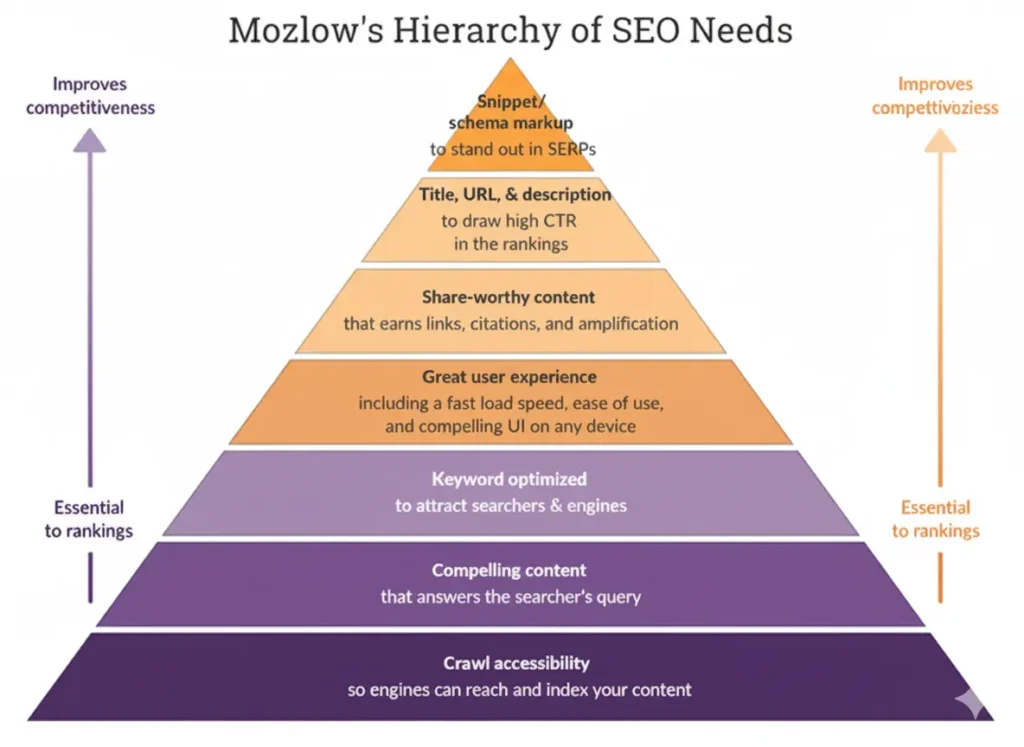
A useful framework for understanding SEO is inspired by a hierarchical model of needs, similar to a pyramid that outlines foundational to advanced elements. At the base are crawl accessibility and technical setup, building up to content quality, user experience, and ongoing optimization. This structure helps prioritize efforts for effective implementation.
Beyond traditional search engines like Google, SEO principles apply to platforms such as YouTube for video content or emerging social search tools like TikTok. Optimizing for these can expand reach, as users increasingly turn to diverse channels for information.
The Three Pillars of SEO
SEO has evolved significantly, but it remains anchored in three core pillars that form the foundation of any successful digital marketing strategy. Mastering these ensures your site is discoverable, relevant, and authoritative in the eyes of search engines and users alike.
- Technical Optimization: This involves behind-the-scenes enhancements to your website’s infrastructure. It includes actions like creating and submitting sitemaps to search engines, ensuring fast loading times, and fixing any crawl errors. Without solid technical SEO, even the best content may go unnoticed.
- On-Page Optimization: Focused on the content and elements visible to users, this pillar emphasizes making pages relevant to search queries. It covers keyword placement in titles, headings, and body text, as well as improving user experience through intuitive navigation and mobile-friendliness. Tools like content management systems (CMS) such as WordPress facilitate these adjustments.
- Off-Page Optimization: This extends beyond your site, building credibility through external signals. The primary method is acquiring backlinks from reputable sources, which signal to search engines that your content is valuable and trustworthy. Social shares and mentions also contribute to this pillar.
For deeper insights, consider exploring comprehensive resources on on-page and off-page techniques to tailor them to your needs.
Paid Search vs. Organic Search – Differences and Similarities
In digital marketing, both paid and organic search play vital roles in driving traffic, but they operate differently. Understanding these can help allocate resources effectively.
Key Differences
Here are five main distinctions:
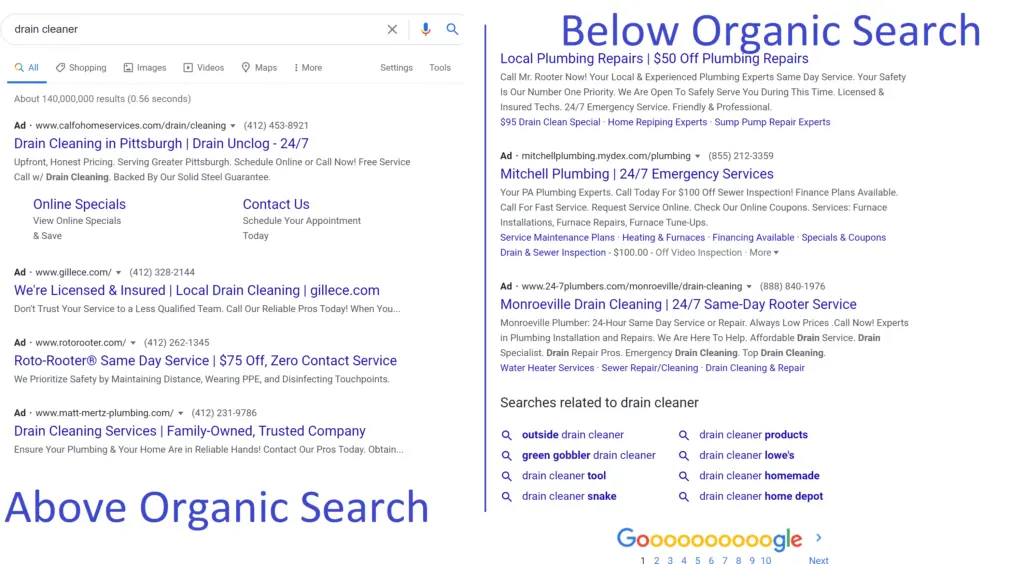
- Position on SERPs: Paid ads typically appear at the top or bottom of results pages, labeled as sponsored. For instance, searching for “drain cleaner” might show ads first, followed by organic listings. Recent features like AI-generated overviews can push ads further down.
- Time to Results: Paid search delivers immediate visibility upon campaign launch, ideal for quick promotions. Organic SEO, however, requires months or years to build momentum through consistent efforts.
- Payment Model: Paid involves costs per click (PPC), where you bid on keywords. Organic is “free” in terms of clicks but demands investment in time, content creation, and tools.
- Return on Investment (ROI): Paid ROI is trackable in real-time but may diminish if budgets run out. Organic offers compounding benefits, with sustained traffic leading to higher long-term returns.
- Traffic Share: Organic search dominates, accounting for the majority of website visits. According to recent BrightEdge data, organic traffic continues to lead, with AI-driven searches making up less than 1% as of 2025, while paid captures around 15% in some studies.
Key Similarities
Despite differences, they share common ground:
- Keyword Research: Both rely on identifying relevant terms users search for, using tools to analyze volume and competition.
- Landing Pages: Optimized pages are crucial for conversions, whether traffic comes from ads or organic results. They should match user intent with compelling content.
- Traffic Goals: The ultimate aim is to attract qualified visitors who engage, convert, or return, fulfilling business objectives.
How Do Search Engines Actually Work?
Search engines are sophisticated systems that process billions of queries daily using algorithms to deliver relevant results. These algorithms evolve with updates, influencing SEO practices. Social media platforms also employ similar logic for content discovery.
Step 1: Search Engine Crawling
Crawlers, often called spiders or bots, scan the web by following links to discover new or updated pages. They start from known sites and branch out, ensuring your content is accessible if properly linked.
Step 2: Search Engine Indexing
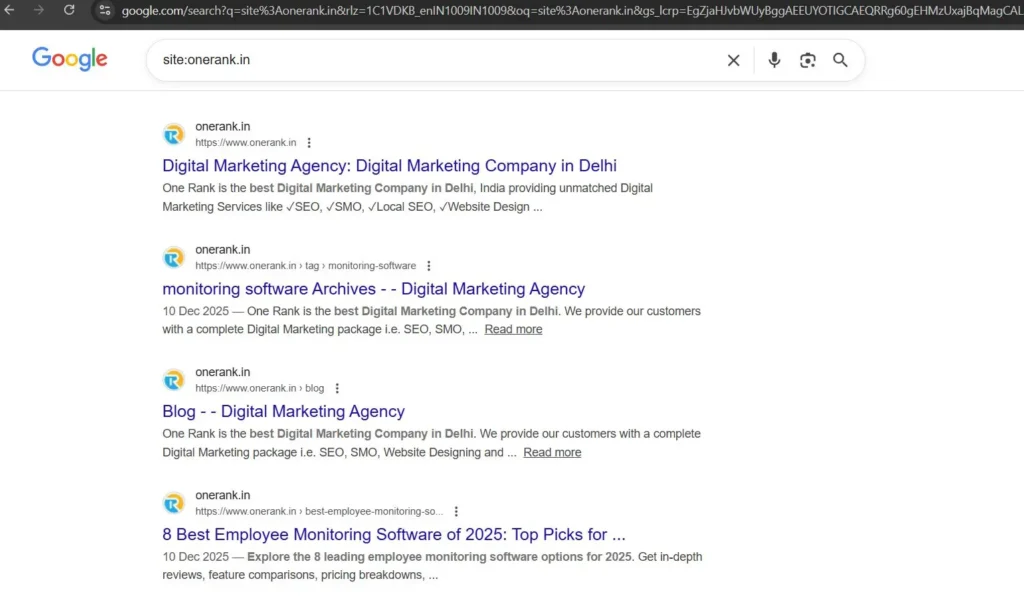
Once crawled, valuable pages are stored in a massive database called an index. Factors like uniqueness, quality, and internal linking determine inclusion. To check if your site is indexed, use operator searches like “site:onerank.in” or tools like Google Search Console.
Step 3: Search Engine Ranking
Ranking involves evaluating pages against over 200 factors, grouped under the three pillars. Key signals include keyword relevance in titles, site speed, backlink quality, content depth, and mobile compatibility. For expert assistance, consulting specialized agencies can provide tailored strategies.
How Does Google Order and Rank Search Results?
Google’s ranking system relies on complex algorithms like Hummingbird for semantic understanding, Panda for content quality, and RankBrain for AI-powered query interpretation. RankBrain excels at handling novel searches by focusing on user intent and satisfaction.
A key evaluation framework is EEAT: Experience, Expertise, Authoritativeness, and Trustworthiness. Content demonstrating these qualities ranks higher.
Keep an eye on emerging technologies like multimodal search and AI models for future-proofing your approach.
How to Get the Most Out of RankBrain
To optimize for RankBrain:
- Target long-tail keywords that match natural language queries.
- Use conversational tone in content to align with voice searches.
- Craft compelling titles and meta descriptions to boost click-through rates.
- Enhance dwell time by creating engaging, in-depth content that reduces bounce rates.
- Incorporate multimedia like videos or infographics to improve user interaction.
Professional support from SEO experts can help implement these effectively.
What Is an SEO Strategy?
An SEO strategy is a planned approach to optimizing content and site elements to secure top rankings, thereby increasing organic traffic. It aligns with user search intent—informational, navigational, or transactional—and may include local optimization for geographically targeted businesses.
For local success, integrate location-specific keywords and claim business listings on maps.
How to Set Objectives for Your SEO Strategy
Setting clear, measurable goals aligns SEO with broader business aims, securing support and enabling progress tracking. Objectives should be SMART: Specific, Measurable, Achievable, Relevant, and Time-bound.
What Metrics Should You Measure for SEO?
Track metrics across the marketing funnel:
- Top-of-Funnel (TOFU): Keyword rankings, organic traffic volume, SERP positions, click-through rates, brand search volume, domain authority.
- Middle-of-Funnel (MOFU): On-page time, engagement rates like shares or comments.
- Bottom-of-Funnel (BOFU): Conversion rates, leads generated, revenue attributed to organic channels.
3 Examples of SEO Objectives
Objectives vary by focus but should be realistic:
- Advance 50% of your top 20 keywords to the first page within nine months, emphasizing keyword optimization.
- Boost organic traffic by 20% in the third quarter and 25% in the fourth, focusing on content expansion.
- Increase market share from 3% to 5% over the next year through competitive analysis and targeted campaigns.
How to Set Objectives for Different Types of Businesses
E-commerce sites prioritize sales and leads via transactional keywords. Service-based businesses focus on lead generation, while informational sites aim for awareness and traffic growth. Remember, SEO is an ongoing process requiring regular adjustments.
How to Become an SEO Specialist
The demand for SEO experts is high, with 91% of marketers noting positive impacts on website performance and goals, according to Conductor’s 2025 State of SEO report.
What Skills Do You Need to Become an SEO Specialist?
Hard Skills
- Conducting keyword research to identify high-potential terms.
- Building links to enhance domain authority.
- Optimizing content using on-page, off-page, and technical methods.
- Analyzing data for performance insights and adjustments.
- Creating compelling content, leveraging AI for efficiency.
- Handling technical aspects like site speed, structured data, and mobile responsiveness.
Soft Skills
Critical thinking for problem-solving, strong communication for reporting, and collaboration for team-based projects.
Resources like online courses and toolkits can accelerate skill development.
What Can You Earn as an SEO Specialist?
Salaries vary by experience and location:
- US: Entry-level: $49,000-$72,000; Analyst: $62,000-$101,000; Strategist: $69,000-$110,000; Manager: $80,000-$120,000; Head: $109,000-$192,000 (based on industry averages). Average around $68,909 per Indeed data.
- UK: Junior: £23,000-£30,000; Executive: £25,000-£35,000; Strategist: £35,000-£45,000; Manager: £38,000-£55,000; Senior: £42,000-£65,000. Average £35,142.
- Ireland: Executive: €31,000-€40,000; Specialist: €40,000-€48,000; Senior: €50,000-€61,000; Manager: €54,000-€70,000. Average €40,544.
Explore roles through job boards and networks for current opportunities.
What Are the Best SEO Tools?
Essential tools include:
- Ranking and Analytics: Google Search Console, Google Analytics 4, SEMrush, Ahrefs, PageSpeed Insights.
- Audit Tools: Screaming Frog, Moz Pro, Sitebulb.
- Keyword and Content: Google Keyword Planner, AnswerThePublic, Ubersuggest, BuzzSumo.
- AI-Enhanced: Surfer SEO, Clearscope, MarketMuse.
These help streamline workflows and provide data-driven insights.
AI and SEO – What’s Coming?
AI is revolutionizing SEO through automated research, content generation, and predictive analytics. Future trends include:
- AI-powered search overviews for instant answers.
- Advanced analytics tools for forecasting trends.
- Enhanced local SEO with AI-driven personalization.
- Optimization for answer engines like chatbots.
- Focus on video content ranking.
- Prioritizing core web vitals for superior user experiences.
Staying ahead requires adapting to these innovations.
Use SEO to Drive Traffic and Boost Brand Awareness
In conclusion, SEO is a powerful tool in digital marketing for enhancing visibility, engaging audiences, and driving sustainable growth. By focusing on the pillars, setting strategic objectives, and leveraging tools and AI, you can achieve remarkable results.
For those eager to master SEO, consider professional certifications or courses covering fundamentals, advanced tactics, and analytics. Start optimizing today to see long-term benefits in traffic and conversions.