

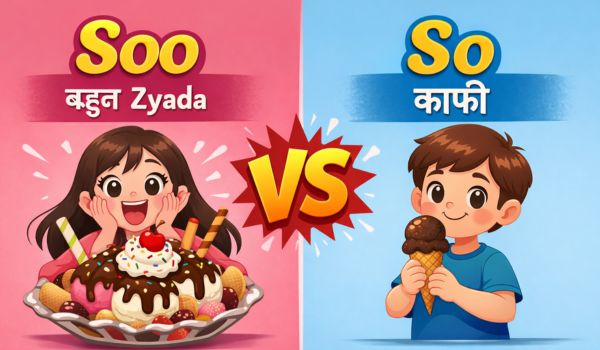
You’ve probably typed out a quick text and wondered about soo vs so. Is one just a stretched-out version of the other? Let’s dive right in. This guide breaks it down for you, helping you grasp when and why each fits. You’ll see how these tiny words pack a punch in your daily chats and writing.
Think about your last message. Did you use “so” to connect ideas or amp up an adjective? Or did “soo” slip in to show extra excitement? Understanding soo vs so sharpens your communication. It keeps things clear and fun.
What Is “So”?
You encounter “so” everywhere in English. It traces back to Old English roots, evolving from words like “swa,” which meant “in this way.” Today, it wears many hats. As an adverb, it intensifies things—like saying you’re so tired after a long day. It ramps up the degree without much fuss.
But that’s not all. “So” acts as a conjunction too. You use it to link causes and effects, such as “It rained, so we stayed inside.” Simple, right? In conversations, it sneaks in as a filler word. Picture starting a story with “So, what happened next?” It smooths transitions and buys you a second to think.
Don’t overlook its role in questions or exclamations. You might ask, “Why so serious?” to probe deeper. Or exclaim, “So what!” when brushing off drama. This versatility makes “so” a staple in both spoken and written English. It’s formal enough for essays yet casual for chats.
Over time, “so” has stayed reliable. Dictionaries recognize it fully, from Oxford to Merriam-Webster. You rely on it for clarity. Without “so,” sentences might feel choppy or less emphatic.
What Is “Soo”?
Now, shift gears to “soo.” You won’t find it in standard dictionaries. It’s more of a modern twist, born from texting and social media. People stretch “so” into “soo” to add emotional weight. Imagine typing “That’s soo cool!” The extra ‘o’ draws out the feeling, making it warmer or more intense.
This variant popped up in digital spaces. Think early 2000s forums or today’s TikTok comments. You use “soo” to convey tone that plain text might miss. It’s like adding a heart emoji but with letters. In casual exchanges, it signals playfulness or exaggeration.
“Soo” isn’t about grammar rules. It’s expressive slang. You might write “I’m soo sorry” to show genuine remorse, stretching the word for emphasis. But beware—it’s not universal. Some see it as a typo, while others embrace it in informal vibes.
Linguists note how “soo” mirrors spoken drawls. You say “so” longer for effect in real life. Online, the spelling captures that. It’s part of evolving language, where visuals tweak meaning.
Key Differences Between Soo and So
Spotting soo vs so boils down to context and intent. “So” is your go-to for standard English. It’s grammatically sound, appearing in books, emails, and speeches. “Soo,” on the other hand, lives in the wild west of slang. It’s not wrong, but it’s niche—perfect for texts, not reports.
Tone sets them apart big time. You pick “so” for neutral or professional vibes. It states facts without flair. “Soo” injects personality. That extra letter screams enthusiasm or sarcasm. Compare “You’re so smart” (straight compliment) to “You’re soo smart” (maybe teasing or gushing).
Visually, they’re close cousins. Pronunciation? Almost identical, though “soo” hints at a prolonged sound. In writing, the difference shines. “So” keeps things concise. “Soo” stretches for impact, like bolding words without the format.
Usage Contexts
You lean on “so” in professional settings. Drafting an email? “So, let’s schedule a meeting.” It flows naturally. In essays or articles, it connects ideas seamlessly. Avoid “soo” here—it might undermine your credibility.
Flip to casual spots. Social media thrives on “soo.” Post “This puppy is soo adorable!” and watch likes roll in. It fits chats with friends, where tone matters. You express overwhelm, like “I’m soo over this weather.”
In storytelling, “so” structures narratives. “So, I went to the store…” But for reactions? “Soo” amps up feelings. “That movie was soo scary!” It personalizes your voice in digital crowds.
Common Mistakes to Avoid
Watch out for mixing tones. You might slip “soo” into a work message, confusing colleagues. Stick to “so” for formality. It prevents awkward corrections.
Another pitfall: overdoing “soo.” Too many extra letters dilute the effect. “Sooo” or “soooo” can look sloppy. Keep it to one extra ‘o’ for punch without excess.
Finally, don’t confuse with similar words. “So” pairs with “very,” but “soo very” feels redundant. Test your sentence aloud. Does it need that drawl? If not, default to “so.”
Real-Life Examples of Soo vs So
Picture a text exchange. You say, “The concert was so fun.” It’s straightforward, sharing a fact. Now tweak it: “The concert was soo fun!!” Suddenly, excitement bursts through. That shift changes the vibe entirely.
In emails, “So, please reply by Friday.” Professional and clear. But in a friend group chat? “Soo, who’s coming tonight?” It adds eagerness, pulling people in.
Sarcasm shines with “soo.” “Oh, you’re soo helpful.” Neutral on paper, but context flips it. Versus “You’re so helpful”—could be sincere. Real scenarios highlight how choice tweaks perception.
Everyday posts on Instagram: “So tired after work.” Basic update. Amp it to “Soo tired 😴”—more relatable, inviting empathy. These examples show soo vs so in action, guiding your picks.
Tips for Choosing Between Soo and So
Assess your audience first. Friends? Go for “soo” to add spark. Boss? “So” keeps it polished. This simple check saves mix-ups.
Consider the medium. Texts and tweets love “soo” for brevity with emotion. Longer pieces? “So” ensures flow. Balance expressiveness with readability.
Practice switching. Read your message aloud. Does it need extra oomph? Stretch to “soo.” If clarity rules, shorten back. Over time, you’ll nail the instinct.
Finally, evolve with trends. Language shifts, so watch how others use them. Adapt without losing your style.
F.A.Q
Is “soo” a real word in English?
Not formally. You won’t spot it in dictionaries, but it’s common slang in casual writing.
Why do people use “soo” instead of “so”?
To emphasize emotion. You add the extra ‘o’ for tone, like drawing out the word in speech.
Can I use “soo” in academic or professional writing?
Skip it. Stick to “so” for polish—you avoid looking informal.
How does “soo” affect pronunciation?
It suggests a longer drawl. You say it like “so” but hold the vowel for effect.
What’s the difference between “soo” and words like “very”?
“Soo” adds visual flair in text. “Very” intensifies formally, without the casual vibe.
Wrapping Up
You’ve now got the scoop on soo vs so. “So” handles the heavy lifting in standard English—connecting, intensifying, filling gaps. “Soo” brings the fun, adding emotional layers in casual spots. Choose based on your crowd and context for spot-on communication.
Remember, language is flexible. Use these insights to tweak your style. Next time you type, you’ll pick with confidence. Curious about more word quirks? Dive into slang trends or grammar tweaks—they keep things fresh.